home service marketing team strategy planning

Google Ads vs Meta Ads for Home Service Companies: What Actually Works?

Most home service business owners ask the same question:

“Should we invest in Google Ads or Facebook ads?”

It sounds like a platform decision.

But it’s actually a strategy decision.

Understanding Google Ads vs Meta Ads for home service companies is the difference between buying random leads and building a predictable marketing system.


The Biggest Mistake Business Owners Make

Many companies treat advertising like a switch.

Leads slow down → turn ads on.
Busy season → turn ads off.

The result?

Unstable revenue.
Unpredictable scheduling.
Constant stress.

Ads are not the strategy.

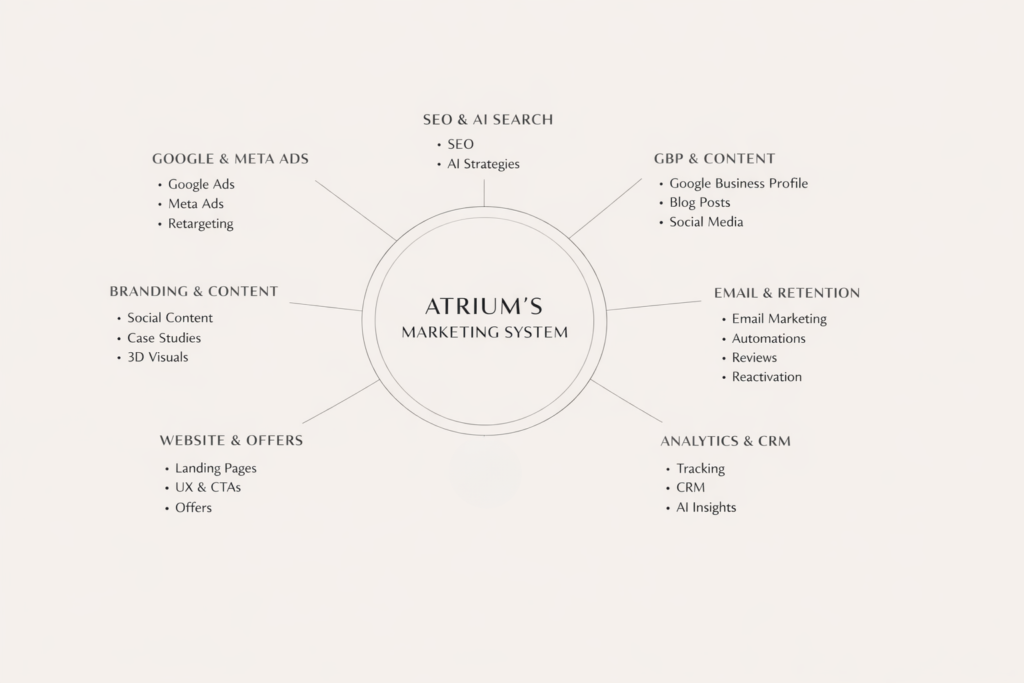
They are tools inside a larger marketing system.


When Google Ads Work Best

Google Ads capture existing demand.

Someone already has a problem and is actively searching:

  • chimney repair near me
  • pool leak inspection
  • roof replacement contractor
  • HVAC emergency service

These customers need help now.

Google Ads work best when:

  • The service is urgent
  • Customers are ready to book
  • High-ticket jobs justify ad cost
  • Local intent is strong

Google Ads generate high-intent leads.

But they depend on people already searching.

If search volume drops, leads drop too.


When Meta Ads Work Best

Meta Ads (Facebook and Instagram) create demand.

Instead of waiting for searches, you introduce your company before customers realize they need you.

Meta works well for:

  • Preventive services
  • Luxury positioning
  • Awareness campaigns
  • Seasonal promotions
  • Retargeting website visitors

Examples:

  • Showing homeowners signs of chimney damage
  • Promoting annual inspections
  • Educating clients about safety risks
  • Showcasing premium projects

Meta Ads warm the market.

They make customers recognize your brand later when they search on Google.


Why Google Ads and Meta Ads Are Not Competitors

This is where most companies get it wrong.

Google captures demand.
Meta creates demand.

When combined correctly:

Meta introduces you →
Customer researches →
Google search happens →
You get the call.

Platforms should support each other.

Not compete for budget.


What a Real Marketing System Looks Like

At ATRIUM Creative Agency, we don’t ask:

“Which ads do you want?”

We ask:

How should your business generate demand year-round?

A proper system includes:

1. Demand Capture

Structured Google Ads campaigns targeting profitable services.

2. Demand Creation

Meta campaigns building visibility and trust before competitors appear.

3. Conversion Optimization

Landing pages designed to turn clicks into booked jobs.

4. Retention Systems

Email reminders, seasonal campaigns, and customer reactivation.

5. Authority Positioning

Content, visuals, and branding that reduce price shopping.

You can see how structured marketing impacts results in our Case Study for a Chimney Business


Why Hiring an Internal Marketing Team Often Fails

Many growing companies consider hiring:

A marketing manager
A social media person
An ads specialist

But quickly discover the reality:

Salary
Benefits
Training
Software
Management time

And still no full strategy.

One person rarely covers ads, branding, analytics, automation, and strategy effectively.


Your In-House Marketing Department, Without the Overhead

This is where our model is different.

ATRIUM operates as your in-house, out-of-house marketing department.

We integrate with your business like a team member.

We:

✔ Build strategy
✔ Manage advertising
✔ Implement systems
✔ Track performance
✔ Optimize continuously

You focus on operations and service delivery.

We handle marketing execution.

No payroll expansion.
No internal management burden.
No fragmented vendors.

Just one aligned team.


The Goal Is Not More Ads

The goal is stability.

When marketing works correctly:

You know where leads come from.
Slow season becomes predictable.
Revenue stops feeling reactive.

Ads become part of an engine, not emergency spending.


Final Thought

If you’re deciding between Google Ads and Meta Ads, you’re asking the right question.

But the better question is:

Do you have a marketing system working behind them?

Because platforms change.

A strong system keeps producing results regardless.

And that’s exactly what we build.

slow season marketing strategy for home service companies

Slow Season Marketing Strategy for Home Service Companies

Every year it happens.

Calls slow down.
The calendar starts opening up.
You look at payroll and start wondering where next month’s jobs will come from.

For many owners, the first reaction is simple:

Increase the ad budget.

But a proper slow season marketing strategy for home service companies is not about spending more money on ads.

It’s about building a system that keeps leads coming in even when demand drops.


Why Most Home Service Companies Struggle During Slow Season

The real issue during slow season is not traffic.

It’s structure.

Many home service companies depend on:

• Referrals
• Google Ads
• Reviews
• Busy season momentum

This works when demand is high.

But when slow season arrives, there is no pipeline, no follow-up system, and no predictable lead flow.

Ads become a temporary fix instead of a long-term strategy.


What a Slow Season Marketing Strategy Actually Means

A strong slow season marketing strategy for home service companies focuses on inbound demand instead of panic spending.

Inbound leads happen when customers find you naturally because your marketing system is working together.

That includes:

• A fully optimized Google Business Profile
• Service pages built for search visibility
• Educational website content
• Ongoing customer communication
• Strong online authority

Inbound marketing creates stability.

Once built, it keeps working even when you are focused on operations.


Demand Generation Without Relying Only on Ads

Ads are important, but they should support your strategy, not replace it.

A structured approach includes:

• Service-specific Google Ads campaigns
• Retargeting previous visitors
• Regional service pages
• Weekly Google Business Profile updates

👉 Example: Businesses improving visibility through proper GBP optimization often see consistent discovery traffic (see Google’s official GBP guidance: https://support.google.com/business).

This creates demand instead of chasing it.


Conversion Optimization: Where Most Revenue Is Lost

Getting clicks is only half the job.

When customers land on your website, they should immediately see:

• Clear service offers
• Trust indicators
• Financing or package options
• Proof of real projects

If every company looks the same online, customers compare price.

When positioning improves, customers compare value instead.

You can see how structured positioning impacts results in our
Flue Tech marketing case study


Retention Is the Real Slow Season Fix

The strongest slow season marketing strategy focuses on existing customers.

Instead of relying only on new leads, successful companies build:

• Maintenance programs
• Seasonal reminders
• Reactivation campaigns
• Review generation systems

Selling to past customers costs almost nothing compared to acquiring new ones.

If your database exists but isn’t being used, revenue is being left on the table.


Authority Positioning for Luxury Home Service Companies

Luxury service providers should not compete like commodity contractors.

Authority is built through:

• Educational content
• Before-and-after visuals
• Real project documentation
• Consistent messaging

When trust increases, price objections decrease.

This is why branding and visualization also play a role in marketing performance.

See how authority positioning supports large projects in this church capital campaign case study


The Slow Season Plan That Works

When slow season begins, we focus on:

• Reactivating past customers
• Promoting preventive services
• Booking future work early
• Increasing average ticket value
• Strengthening visibility before peak demand

Instead of reacting to slow months, the business becomes predictable.


What This Means for Business Owners

You should not have to:

• Wonder where leads come from
• Guess if ads are working
• Manage marketing tools
• Write campaigns yourself
• Track performance manually

Your role is operations.

Our role is marketing execution.

At ATRIUM, we operate as an extension of your team by designing, building, and managing the complete marketing system.


The Real Shift

Most companies buy revenue month by month.

High-performing operators build marketing assets.

A complete slow season marketing strategy for home service companies turns marketing from stressful into controlled growth.


If Slow Season Is Stressing You Out

Before increasing your ad budget again, ask:

Do I have a retention system?
Is my Google presence optimized?
Are my offers structured clearly?
Do customers see authority or just pricing?

If not, that’s where strategy starts.

And that’s exactly what we build.

What Most Chimney and Fire Safety Companies Get Wrong About Their Marketing

What Most Chimney and Fire Safety Companies Get Wrong About Their Marketing

February 13th 2026

Most chimney and fire safety companies treat February like a sales event instead of a trust-building opportunity. They increase ad spend during National Chimney Safety Week without first ensuring their messaging, offer structure, and follow-up systems can actually convert skeptical homeowners. The result is wasted budget on clicks that don’t become customers.

Why This Problem Exists Now

February is the industry’s designated awareness month. Trade associations promote it. Suppliers mention it. So most companies assume they should “do something” with their marketing during this window.

But three realities collide:

Ad costs spike. When multiple local competitors increase their Google Ads and Facebook budgets simultaneously, cost-per-click rises. You’re bidding against each other for the same search terms and the same audience. Platforms charge more because demand is higher.

Homeowners are comparison shopping. February promotions train buyers to wait for discounts. They’re not looking for the most qualified company. They’re looking for the best deal. This attracts price-sensitive leads who are harder to close and less profitable to serve.

Trust still matters more than urgency. Chimney and fire safety services involve real risk. Homeowners need to believe you know what you’re doing, that you’ll show up when scheduled, and that you won’t upsell unnecessary work. A February promotion doesn’t build that belief. It just makes you one of several companies offering a discount.

ATRIUM works with chimney and fire safety companies year-round. The pattern is consistent: businesses that treat February as a visibility boost without changing their underlying marketing infrastructure see temporary spikes in inquiries but no meaningful improvement in revenue or profit.

What Most Businesses Misunderstand

The assumption is simple: more awareness equals more customers.

So companies increase their budget, run promotions, and expect results. When leads don’t convert at the rate they hoped, they assume the problem is volume. They think they need even more traffic.

But volume isn’t the issue.

The issue is that most chimney and fire safety marketing looks identical. Same stock photos of fireplaces. Same language about safety and certification. Same discount-driven offers. When a homeowner sees three or four companies saying nearly the same thing, they default to price.

This isn’t the homeowner’s fault. It’s a differentiation problem.

Another common misunderstanding: assuming that being busy means marketing is working. February might generate calls. Your calendar might fill up. But if those jobs are lower-margin, require more follow-up, or come from customers who don’t refer others, you’re not building a sustainable system. You’re just staying busy.

ATRIUM sees this repeatedly across service and construction businesses. Activity gets confused with progress. Marketing spend increases, but profit per customer stays flat or declines.

What Actually Works at a Strategic Level

Effective marketing for chimney and fire safety companies isn’t about timing or promotions. It’s about clarity and positioning.

Clarity means knowing exactly who you serve best. Not all homeowners are the same. Some want the cheapest option. Some want the most experienced company. Some care about responsiveness. Some prioritize long-term relationships. If your marketing tries to appeal to everyone, it persuades no one.

The companies that grow profitably are the ones that define their ideal customer clearly and then build messaging, pricing, and service delivery around that profile. This makes every marketing dollar more efficient because you’re not paying to attract people you don’t actually want to work with.

Positioning means explaining why you’re different in a way that matters to the buyer. This isn’t about being “the best” or “certified” or “experienced.” Every company claims that. Positioning is about identifying the specific problem your ideal customer faces and demonstrating that you understand it better than anyone else.

For example: a company that specializes in historic homes doesn’t just “do chimney work.” They solve a specific problem—preserving original materials while meeting modern safety standards. That’s a position. It’s narrow, but it’s clear. And it attracts the right kind of customer.

When your positioning is sharp, you spend less time educating leads about why they should choose you. They already understand. The sale becomes easier and faster.

What to Focus on Instead

If you’re spending money on marketing right now—whether it’s February or any other month—these are the priorities that determine whether that spend works:

Budget clarity. Know exactly how much you’re spending, where it’s going, and what you’re getting back. Not in terms of clicks or impressions, but in terms of actual customers and actual profit. If you can’t connect a marketing dollar to a result, you can’t make intelligent decisions about where to invest more or pull back.

Lead quality over lead volume. A hundred inquiries from people shopping on price is worse than twenty inquiries from people who value expertise. Structure your messaging and your offers to filter out the wrong leads before they waste your time. This means being willing to say no to certain types of work and certain types of customers.

Messaging that builds trust, not urgency. Homeowners hire chimney and fire safety companies because they’re worried about safety, frustrated by unreliable contractors, or confused about what actually needs to be done. Your messaging should address those concerns directly. Explain your process. Show how you handle common problems. Demonstrate competence in a way that feels specific, not generic.

Systems that turn leads into customers. Marketing gets people to raise their hand. What happens next determines whether they become paying customers. If your follow-up is slow, inconsistent, or handled differently by different people, you’re losing deals. The businesses that grow are the ones that treat follow-up as a system, not a task.

ATRIUM works with businesses that have these fundamentals in place. When the infrastructure is sound, increasing marketing spend produces predictable results. When it’s not, more budget just creates more waste.

The Real Opportunity in February

February isn’t useless. But it’s not a standalone strategy.

The real opportunity is using heightened awareness to position yourself as the company that does things differently. While competitors are discounting, you can focus on education. While they’re chasing volume, you can focus on qualifying the right leads.

This requires confidence in your pricing and clarity about who you serve. It also requires patience. You won’t “win” February by generating the most calls. You’ll win by attracting the customers who become long-term relationships and referral sources.

That’s a harder sell internally. It’s easier to justify marketing spend when the phone rings constantly. But sustainable growth comes from profitable customers, not just busy schedules.

FAQ

Why does my cost per lead go up during February?

Because multiple chimney and fire safety companies increase their ad budgets at the same time, competition for the same keywords and audience segments drives up auction prices on platforms like Google and Facebook. Higher demand equals higher cost.

Should I stop running promotions during National Chimney Safety Week?

Not necessarily. But promotions should serve a strategic purpose—like attracting a specific type of customer or filling a particular service gap. If you’re discounting just because everyone else is, you’re training customers to wait for deals and competing primarily on price.

How do I differentiate when every company offers the same services?

Differentiation isn’t about what you do. It’s about who you do it for, how you do it, and what specific problem you solve better than anyone else. Narrow your focus to a particular customer type or service category and build your messaging around their specific concerns.

What’s the most common reason chimney and fire safety marketing doesn’t work?

Poor follow-up. Most businesses generate enough leads. The breakdown happens in how quickly and consistently they respond, how they qualify interest, and how they move people from inquiry to scheduled appointment. Marketing creates opportunity. Systems convert it.

Is it worth spending more during February or should I spread budget evenly across the year?

It depends on whether your infrastructure—messaging, positioning, follow-up, service delivery—is ready to handle increased volume profitably. If those fundamentals aren’t in place, spreading budget evenly and focusing on sustainable systems will produce better long-term results than capitalizing on a short seasonal spike.

The Atrium Review

Listen to our podcast

Atrium Review

Post recientes

  • Titulo

    Subtitulo

  • Titulo

    Subtitulo

  • Titulo

    Subtitulo

             
           Let’s Talk Strategy

If you’re spending on marketing but not seeing the results you expected, the problem probably isn’t your budget. It’s clarity.

ATRIUM helps chimney, fire safety, and specialty construction companies build marketing systems that produce predictable, profitable growth. If you’d like a straight conversation about what’s working, what’s not, and where to focus next, reach out. No pressure. Just clarity.

Schedule a free consultation

Schedule a free


Diego romero

Leads paid media and performance strategy at ATRIUM. He specializes in structured Google Ads systems for luxury home service and construction businesses. Diego holds certifications in Google Ads (Search & Display), Google Analytics, Meta Media Buying, HubSpot Inbound Sales, and Hootsuite Academy

    The Atrium Insider
    Get one email a month with design tips, free templates, and behind-the-scenes stories from the studio.

    Join the Newsletter


    Últimos articulos

    • Titulo articulo

      Subtitulo

      Quis aute iure reprehenderit in voluptate velit esse cillum dolore eu fugiat nulla pariatur. Ex…

    • Titulo articulo

      Subtitulo

      Quis aute iure reprehenderit in voluptate velit esse cillum dolore eu fugiat nulla pariatur. Ex…

    • Titulo articulo

      Subtitulo

      Quis aute iure reprehenderit in voluptate velit esse cillum dolore eu fugiat nulla pariatur. Ex…

    Continue reading

    Business owner feeling overwhelmed by digital marketing options like AI tools, social media, and online advertising.

    Are Google Ads Still Worth It in the Age of AI?

    Why Local Businesses Still Win With Google Search Advertising

    Artificial intelligence is changing how people search online. Tools like ChatGPT, Google’s AI Overviews, and voice assistants are transforming the way users discover information.

    Some business owners are asking an important question:

    If AI is answering questions directly, do we still need Google Ads?

    The short answer is yes, more than ever.

    AI is changing marketing, but it is not replacing search advertising. In fact, Google Ads remain one of the most powerful ways for local businesses to capture customers who are ready to take action.

    For service-based businesses like real estate agencies, restaurants, contractors, and local professionals, search advertising continues to be one of the highest-intent lead generation channels available.

    Let’s look at why.


    Google Still Dominates Search

    Despite the growth of AI tools, Google remains the primary place where people search for businesses, services, and solutions.

    According to StatCounter, Google maintains around 90% of the global search engine market share.

    Source

    That means when someone searches:

    • “roof repair near me”
    • “best realtor in Brooklyn”
    • “Italian restaurant downtown”
    • “contractor for home remodel”

    they are overwhelmingly likely to use Google Search first.

    For local businesses, being visible in those searches is critical.


    Google Ads Capture High-Intent Customers

    One of the biggest advantages of Google Ads is intent.

    Unlike social media advertising, where users are browsing casually, Google Ads appear when someone is actively searching for a solution.

    For example:

    Low intent search behavior
    Browsing Instagram for inspiration

    High intent search behavior
    “Emergency plumber near me”

    Those high-intent searches are extremely valuable.

    Research shows that businesses make an average of $2 in revenue for every $1 spent on Google Ads.

    Source:
    Google Economic Impact Report

    Google Ads also allow businesses to appear immediately at the top of search results, even above organic listings.

    For local service providers, this means capturing customers exactly when they are ready to call or book a service.


    AI Is Changing Search, But Not Replacing It

    Google has introduced AI-powered search features called AI Overviews, which generate summaries directly within search results.

    Source:
    Google AI Overview documentation

    These summaries appear mainly on informational searches, such as:

    • “How does escrow work?”
    • “Best neighborhoods in Brooklyn”
    • “What is the average cost of roof repair?”

    But when users are ready to act, they typically perform transactional searches, such as:

    • “Brooklyn real estate agent”
    • “roof repair company near me”
    • “restaurant reservations New Jersey”

    These searches still trigger:

    • Google Ads
    • Google Maps results
    • business listings

    Google has also confirmed that advertising will be integrated into AI search experiences, meaning ads will continue to be part of the search ecosystem.

    Source: Google Ads Help Center

    Rather than replacing ads, AI is being used to optimize targeting, bidding, and campaign performance.


    Digital Advertising Continues to Grow

    Another strong indicator that ads are not disappearing is the continued growth of the advertising market.

    Global advertising revenue is projected to exceed $1 trillion annually, with digital advertising accounting for the largest share.

    Source: Reuters

    Google alone generates over $200 billion per year in advertising revenue, demonstrating the continued demand for search advertising.

    Source: Alphabet Annual Reports

    If search advertising were becoming obsolete, companies would not continue investing billions into it.


    Why Google Ads Are Essential for Local Businesses

    For local service providers, Google Ads offer a unique advantage: visibility at the moment of need.

    When someone searches for a service nearby, Google prioritizes results that help users take immediate action.

    This is especially valuable for businesses such as:

    Real Estate Agencies

    Buyers and sellers often search for local agents when they are ready to make a move.

    Restaurants

    People frequently search for nearby dining options while actively planning where to eat.

    Contractors and Construction Companies

    Homeowners often search Google when they need repairs, renovations, or quotes.

    Professional Services

    Lawyers, consultants, financial advisors, and medical providers rely heavily on search visibility.

    In each of these cases, Google Ads can place a business directly in front of customers exactly when they need the service.


    How AI, SEO, and Social Media Fit Into the Strategy

    While Google Ads should be the core of the strategy, modern marketing works best when several channels support each other.

    Google Ads

    Capture high-intent customers searching for services.

    SEO (Search Engine Optimization)

    Build long-term visibility through optimized website content and local search rankings.

    Google Business Profile

    Improve visibility in Google Maps and local searches.

    Meta Advertising

    Generate brand awareness and discovery through Instagram and Facebook.

    AI Tools

    Use AI to analyze market trends, generate content, and improve campaign performance.

    Instead of replacing advertising, AI helps optimize these systems and make them more efficient.


    A Practical Marketing Framework for Local Services

    A modern local marketing strategy often follows this structure:

    1. Google Ads capture high-intent leads actively searching for services.
    2. SEO and website content build long-term visibility and authority.
    3. Google Business Profile optimization improves local discovery through Maps.
    4. Meta advertising introduces the brand to new audiences.
    5. AI tools improve research, content creation, and data analysis.

    This layered strategy helps businesses reach customers at every stage of the buying journey.


    How Atrium Helps Local Businesses Grow

    At Atrium, we help service-based businesses build marketing systems designed to generate consistent leads.

    Our approach focuses on combining high-intent advertising with long-term visibility strategies.

    We support businesses with:

    Google Ads Campaign Management

    Strategic keyword targeting, campaign optimization, and performance tracking designed to generate qualified leads.

    Website Design and Conversion Optimization

    Websites built to turn search traffic into inquiries, calls, and bookings.

    SEO and Content Strategy

    Search-optimized content that improves rankings and helps businesses appear in both traditional and AI-driven search results.

    Google Business Profile Optimization

    Improving visibility in Google Maps and local search results.

    Meta Advertising

    Social media campaigns designed to build awareness and support search traffic.

    AI-Assisted Marketing Systems

    Using AI tools to improve content creation, data analysis, and campaign efficiency.

    Our goal is to create marketing systems that generate consistent growth for local businesses.


    Frequently Asked Questions

    Are Google Ads still effective in 2026?

    Yes. Google remains the dominant search engine, handling the vast majority of online searches worldwide. Google Ads allow businesses to appear at the top of search results when customers are actively looking for services.


    Do AI search results replace advertising?

    No. AI search features provide informational summaries, but transactional searches still display ads, local listings, and business results.

    Source


    Are Google Ads better than social media ads?

    They serve different purposes. Google Ads capture high-intent searches, while social media ads are better for brand awareness and discovery.

    The most effective strategy usually combines both.


    What types of businesses benefit most from Google Ads?

    Local service providers often benefit the most, including:


    • contractors and construction companies
    • real estate agencies
    • restaurants and hospitality businesses
    • healthcare providers
    • home services and repair companies
    • professional services


    How much should a local business invest in Google Ads?

    Budgets vary by industry and market, but even modest campaigns can generate meaningful leads when properly optimized.

    The key factor is targeting the right keywords and local audiences.


    Final Thoughts

    Artificial intelligence is changing the digital landscape, but it is not replacing search advertising.

    If anything, AI is helping platforms like Google become more sophisticated in how they deliver ads and connect businesses with customers.

    For local service providers, Google Ads remain one of the most powerful tools for generating qualified leads and growing a business.

    Businesses that combine search advertising with strong websites, SEO, local optimization, and AI-assisted marketing strategies will be best positioned for the future.


    Ready to turn search traffic into real leads?

    If you’d like help building a strategy tailored to your business, Atrium can help design a marketing system that combines Google Ads, SEO, local search optimization, and AI-powered marketing tools to generate consistent growth.

    Schedule a Consultation

    How AI Search Is Changing the Way Clients Find You (and How to Stay Visible)

    Search is evolving, and AI tools are now recommending brands, services, and studios directly. If your visibility feels flat, the issue isn’t demand, it’s how people are discovering. This guide shares how ATRIUM helps design-driven businesses stay visible and trusted across AI platforms, globally.On this page

    AI Discovery: The New Way Clients Find You

    AI platforms like ChatGPT, Perplexity, and Google’s AI experiences are acting as digital advisors. They synthesize, compare, and recommend, not just list links. These systems prefer content that is specific, verifiable, and consistent. Generic statements like “quality service” or “innovative solutions” are ignored, clear proof wins.

    For design-led businesses, the opportunity is simple, speak clearly about outcomes, demonstrate expertise with first-hand evidence, and make your brand easy to recognize across the web.

    ATRIUM’s Five-Pillar Framework

    1) Brand Clarity

    AI systems identify entities, not just keywords. Define your brand with consistent language, visuals, and positioning everywhere. If you specialize in high-fidelity 3D visualization or brand systems for architects, say it the same way across your site, profiles, and features. Consistency helps AI understand who you are and when to recommend you.

    2) Service Specificity

    Specific services outperform generic labels. Replace broad terms with clear, outcome-focused descriptions, for example, “Cinematic architectural renderings built to secure faster approvals and investor confidence,” or “360° project experiences for pre-sales and leasing campaigns.” Create proprietary names where relevant, such as “Signature Visualization” or “Architect’s Preview Render,” and use them consistently.

    3) First-Party Proof

    Publish insights only you can provide, real project breakdowns, timelines, measurable results, process documentation, and lessons learned. Case studies and data points signal authority. AI systems favor sources with original expertise over summaries that anyone can produce.

    4) Third-Party Credibility

    What others say about you matters. Earn mentions through features, directories, partner pages, and associations. Encourage clients to share public testimonials and project credits. A distributed footprint helps AI connect references back to your brand and increases the likelihood of being recommended.

    5) Integration Over Isolation

    Treat visibility as an ecosystem. Brand clarity supports authority, authority attracts mentions, mentions build trust, trust drives recommendations. Start with your strongest pillar, shore up the weakest, and maintain a consistent standard across all touchpoints.

    Related ATRIUM pages:

    Why Acting Now Matters

    Most teams still optimize only for traditional search, yet clients are already researching with AI every day. Early movers set the standard, secure references across platforms, and become the default recommendation when prospects ask for the best partner in their category.

    If you want AI to recommend your brand for architectural visualization, branding, or web design, build clear signals, share first-hand expertise, and earn credible mentions. The advantage compounds over time.

    Get a tailored AI-visibility plan

    In one consult, we’ll audit your current footprint, identify quick wins, and map a practical plan for international reach.

    Schedule a call with ATRIUM

    FAQs

    How is AI search different from traditional SEO?

    Traditional SEO targets ranked lists, AI search synthesizes and recommends. Clear brand definitions, first-party proof, and third-party credibility play a bigger role than ever.

    What type of content does AI trust?

    Original insights, project data, timelines, measurable outcomes, and expertise from credible sources. Summaries without evidence are less effective.

    How fast can results show?

    Timelines vary by footprint. Brands with consistent language, live case studies, and existing mentions see quicker movement. The earlier you standardize signals, the better.

    Can ATRIUM help with international reach?

    Yes. ATRIUM aligns your services, case studies, and website to match AI discovery patterns, then supports authority with targeted features and consistent brand language across markets. From ATRIUM, your boutique creative partner for 3D visualization, branding, and web design.

    Google Ads Account Security Audit: How We Prevented a $70K Loss

    When a new client asked us to review their digital advertising, we started with a Google Ads account security audit.

    What we discovered was not a performance issue.

    It was a serious security risk.

    Multiple ad accounts had been created over time.
    Too many users had full admin access.
    There were no centralized permissions or protection protocols.

    Even gaining access took time.

    But once inside, we realized ads had been running unchecked, spending nearly $6,000 per month beyond the intended budget.

    And that was only the beginning.


    When Poor Account Security Turns Into Real Financial Loss

    Shortly after access was granted, the account was hacked.

    Because admin permissions had never been cleaned up, unauthorized users were able to launch malicious campaigns.

    Within three days:

    • Three fraudulent ads launched
    • Budgets overridden
    • Nearly $70,000 in ad spend accumulated

    This wasn’t a targeting problem.

    It was a setup problem.

    According to Google’s own account protection guidelines, limiting admin access is one of the most critical security steps for advertisers.
    👉 https://support.google.com/google-ads/answer/6372672


    Acting Fast: Containing the Damage

    We immediately escalated the issue to Google’s billing and security teams.

    At the same time, we:

    • Paused compromised campaigns
    • Initiated a full investigation
    • Documented unauthorized activity
    • Built a clean backup advertising account
    • Relaunched campaigns to maintain lead flow

    The client never lost momentum during peak season.

    ✅ Final result: $70,000 fully refunded.


    The Real Issue Was Not Advertising Performance

    Most conversations around Google Ads focus on:

    Keywords
    Headlines
    Bidding strategies

    But a proper Google Ads account security audit looks deeper.

    Marketing success depends on:

    ✔ Account structure
    ✔ Permission control
    ✔ Platform integrations
    ✔ Data ownership
    ✔ Security oversight

    Without these foundations, even successful campaigns are vulnerable.


    Why Marketing Security Extends Beyond Google Ads

    The same risks apply across your entire digital ecosystem:

    • Social media accounts
    • Website hosting
    • Domains
    • Email marketing platforms
    • Analytics tools
    • CRM systems
    • Design software
    • File sharing access

    One weak access point can compromise everything.

    This is why we approach marketing as infrastructure, not isolated campaigns.

    You can see how structured systems impact long-term performance in our
    👉 Flue Tech marketing case study
    https://atriumvisual.studio/client-spotlight-flue-tech-inc/


    Simplifying Access Without Sacrificing Security

    Most business owners don’t have time to track passwords across ten platforms.

    So we simplify the process.

    ATRIUM uses secure integration tools that allow controlled access without sharing sensitive credentials.

    No spreadsheets.
    No outdated logins.
    No operational risk.

    Just a secure, centralized system.


    Why Every Business Needs a Google Ads Account Security Audit

    If multiple agencies, employees, or contractors have accessed your marketing accounts over time, risks accumulate quietly.

    A professional Google Ads account security audit ensures:

    • Correct ownership setup
    • Restricted admin access
    • Secure integrations
    • Budget protection
    • Long-term operational control

    Security is not optional once advertising budgets scale.


    Final Takeaway

    Strong marketing starts with strong foundations.

    Strategy matters.
    Creative matters.
    Targeting matters.

    But none of it works without proper setup and protection.

    Saving this client $70,000 was not luck.

    It was structure.

    And that’s exactly how we approach every marketing system we manage.

    How to Get More Clients Without the Marketing Headaches

    I was talking to one of our clients last week. He’s been running his architecture firm for 25 years, and he looked exhausted. “Diego,” he said, “I feel like I’m shouting into the void. Everyone says I need to be online, but I have no idea where to start. Do I really need to be dancing on TikTok to get clients?”

    If you’re a seasoned professional—maybe you’re an architect like Jim, a consultant, or a small business owner—and you’re scratching your head about this whole “getting clients online” thing, you’re definitely not alone. And here’s the relief you’ve been waiting for: you absolutely do NOT need to go viral on TikTok.

    Your Website: It’s Your Digital Storefront

    Now, instead of people driving by your office, they Google you. If your site looks dated or confusing, it’s an instant “no thanks.” Your site doesn’t need to win awards, it just needs to make people feel like you’re legit.

    We build clean, trustworthy websites starting at $1,800. Add SEO setup ($1,500) and people actually find you when they search “architect near me.” Add branding if your logo’s stuck in the ’90s.

    Website Design

    Google Ads: High-Intent Leads, No Cold Calling

    Think of it like this: instead of calling strangers, your name shows up *exactly when someone searches for what you offer*. Our Google Ads plans start at $500/month, and most clients see 3–6x ROI in just a few months.

    We don’t “set and forget.” We tweak ads every week to get better leads and lower costs. Basically, it’s like hiring a smart sales assistant who never sleeps.

    Trust Still Sells—Only Now It’s Online

    People don’t just call anymore. They read reviews, check your site, stalk your testimonials. We help you turn past client wins into scroll-stopping case studies that build trust fast. And if writing isn’t your thing, we’ll handle it.

    Social Media: For Visibility, Not Virality

    No, you don’t need TikTok. For most 60+ professionals, LinkedIn and Facebook are perfect. We create, design, and schedule your posts for $1,500/month—including one boosted ad to get you noticed.

    You approve everything before it goes live. And no, you don’t have to log in and figure it all out. We do the heavy lifting.

    Google Ads

    Email: Still the Underdog MVP

    Email is low-key one of the best ways to stay visible. Build a small list of past clients, leads, and referrals. Send a quick monthly tip or success story. We can write and design these for you, so you don’t stare at a blinking cursor.

    Real Talk: You Don’t Have to DIY This

    You didn’t start your business to become a digital marketing guru. We get it. At ATRIUM, we act like part of your team. From websites and branding to ads and content, we make sure your digital game actually works—and makes sense.

    Ready to stop shouting into the void? Let’s talk.

    Book a Free Strategy Call

    Building a Strong Identity: Branding Strategies for Architects

    Branding for architects is a powerful tool for building trust and fostering connections with clients. In today’s competitive market, a well-crafted brand identity can set firms apart, communicating reliability and design philosophy while driving substantial business growth.

    Key Takeaways:

    • 81% of consumers require brand trust before considering a purchase
    • Strong branding can boost brand growth by 20%
    • User-generated content is 50% more trusted than traditional media
    • 90% of architecture firms have 1-50 employees
    • Effective branding strategies leverage digital platforms and AI tools

    The Power of Branding in Architecture

    In the architecture industry, branding goes beyond logos and color schemes. It’s about creating a lasting impression that resonates with clients and sets your firm apart. With 81% of consumers needing to trust a brand before making a purchase, architects must focus on building credibility through their branding efforts.

    A strong brand identity can communicate your firm’s values and design philosophy effectively. This connection is crucial, as 57% of consumers prefer companies they feel connected to over competitors. By investing in branding, architectural firms can increase their growth potential by up to 20%, making it a vital component of business strategy.

    Navigating Economic Challenges Through Branding

    The architecture industry has faced its share of economic hurdles. The Architecture Billings Index (ABI) has been below 50 for 27 of the last 30 months as of March 2025, indicating a contraction in billings. However, recent stabilization in commercial property values and interest rates provides a glimmer of optimism for the coming year.

    With an average project backlog of 6.5 months, firms have a runway to focus on brand-driven marketing efforts. This period presents an opportunity to strengthen client relationships and attract new business through strategic branding initiatives. By showcasing reliability and expertise during challenging times, firms can build lasting trust with clients.

    Effective Branding Strategies in the Digital Age

    In today’s digital landscape, architects must adapt their branding strategies to stand out. User-generated content has become a powerful tool, being 50% more trusted and 20% more influential than traditional media. Firms should leverage digital platforms to share testimonials, project stories, and behind-the-scenes insights.

    To create a strong visual brand, incorporate design principles such as emphasis, proportion, and hierarchy. Focus on visual platforms like Instagram and LinkedIn for portfolio showcasing. Here are some key strategies to consider:

    • Use storytelling to highlight unique project experiences
    • Showcase your design process through time-lapse videos or sketches
    • Share client testimonials and project outcomes
    • Utilize AI tools for rendering and project management

    One-third of firms are actively using AI for various tasks. Key software tools in the industry include Revit, AutoCAD, SketchUp, Bluebeam, and Material Bank. Integrating these tools into your branding narrative can demonstrate your firm’s technological proficiency and innovation.

    Branding’s Role in Talent Attraction and Business Growth

    Branding isn’t just about attracting clients; it’s also crucial for talent acquisition. With 90% of architecture firms having 1-50 employees, standing out as an employer is vital. A strong brand can position your firm as a desirable workplace, attracting top talent in a competitive market.

    Interestingly, women’s salaries in architecture grew faster than men’s in 2025, highlighting the industry’s progress in gender equality. Firms can use this trend in their branding to showcase their commitment to diversity and inclusion.

    To measure the impact of branding on business growth, track metrics such as the ABI and new contract values. The Monograph’s 2025 Benchmarks Report provides valuable industry standards for comparison. By focusing on consistent branding and showcasing your firm’s unique value proposition, you can drive business growth and establish a strong market position.

    Sources:
    American Institute of Architects (AIA): Will the 2025 economy improve for architects?
    Emulent: 2025 State of Marketing Report for the Architecture & Design Industry
    American Institute of Architects (AIA): ABI March 2025: Business conditions at architecture firms stabilize
    Blacksmith Agency: Branding Statistics
    Monograph: Monograph Releases 2025 Salary and Business Benchmarks for Architects & Engineers
    ThinkLab: 2025 US Design Industry Benchmark Report
    Toptal: Principles of Design
    Bespoke Careers: Architecture and Design Market Report 2025

    The Importance of High-Quality 3D Renderings in Architecture

    In the world of architecture, the ability to visualize a project before it is even built is crucial. This is where architectural 3D renderings come into play. High-quality renderings not only allow architects to showcase their designs to clients and stakeholders but also aid in the decision-making process. As an architectural rendering company, we believe that collaborating with us can significantly enhance the effectiveness and efficiency of the architectural design process. Let’s explore why architects need high-quality renderings and how working with our company can be beneficial for them.

    Captivating Visual Communication

    Architectural renderings serve as a powerful tool for communication between architects, clients, and stakeholders. They provide a virtual representation of the project, allowing everyone involved to better understand the design intent. By working with our architectural rendering company, architects can achieve renderings that captivate the viewer and effectively convey the essence of the design. Our skilled team of artists and designers ensure that every detail is accurately portrayed, resulting in stunning and visually appealing renderings.

    Making Informed Design Decisions

    Design iterations are a fundamental part of the architectural design process. High-quality renderings enable architects to evaluate different design options and make informed decisions. By collaborating with our architectural rendering company, architects can receive accurate and realistic renderings that help them envision the project in its entirety. These renderings provide insights into space utilization, material selection, and lighting conditions, allowing architects to refine their designs and create spaces that truly meet the needs and expectations of the clients.

    Gaining a Competitive Edge

    In today’s competitive architectural industry, it is crucial for architects to stand out and differentiate themselves from the competition. High-quality renderings can serve as an effective marketing tool, enabling architects to showcase their designs in the best possible light. By partnering with our architectural rendering company, architects can benefit from our expertise in creating photorealistic renderings that leave a lasting impression. Our renderings can be used in portfolios, presentations, marketing materials, and online platforms to attract clients, investors, and potential collaborators.

    Saving Time and Resources

    Creating physical models or building prototypes can be time-consuming and expensive. High-quality renderings offer a cost-effective alternative that allows architects and developers to visualize their designs without the need for physical construction. By working with Atrium Visual Studio our clients can save time and resources by eliminating the need for costly physical models. Our renderings can be produced quickly and efficiently, helping aour customers stay on schedule and within budget.

    Final Thoughts

    In the world of architecture, high-quality renderings have become an indispensable tool for architects and designers. They help communicate design intent, aid in decision-making, and strengthen marketing efforts. By collaborating with Atrium Visual Studio, architects and real estate developers can ensure that their renderings are visually stunning, accurate, and realistic. We are committed to providing top-notch renderings that fulfill the needs and exceed the expectations of our clients. So why settle for anything less when you can work with an architectural rendering company that prioritizes quality and excellence? Contact us today and let us bring your architectural visions to life!

    Branding for Architects and Why You Should Have a Media Kit

    In today’s digital age, architects must go beyond their design capabilities and showcase their work effectively. One powerful tool that can help architects stand out and establish a strong professional presence is a media kit. A well-crafted media kit can serve as a comprehensive portfolio, a marketing tool, and a means of communication with clients, colleagues, and the media. As markets become more saturated and pressure rises for brands to be more than just a nice logo, there has become a need for a way to package and present a brand’s story and practical information in a way that is professional, convenient, and eye-catching. Let’s explore some key reasons why architects need a media kit and how it can benefit their careers.

    Showcasing your Expertise

    As an architect, your work speaks volumes about your skills and capabilities. A media kit allows you to present your portfolio of projects, highlighting your expertise and design aesthetic. By including high-quality images, descriptions, and background information about each project, you can effectively demonstrate your creative approach, problem-solving skills, and attention to detail. A media kit acts as a digital showcase of your work, allowing potential clients and collaborators to gain a deeper understanding of your design philosophy and abilities.

    Building Credibility and Trust

    In any professional field, credibility and trust are essential. A media kit can help you establish yourself as a reputable architect by including elements that showcase your qualifications and achievements. This may include your educational background, certifications, awards, publications, and testimonials from satisfied clients. By providing concrete evidence of your capabilities and accomplishments, a media kit helps build trust and confidence in your abilities, increasing the likelihood of securing new projects and collaborations.

    Enhancing Networking Opportunities

    Networking plays a crucial role in the architecture industry. Whether you’re attending industry events, conferences, or connecting with potential clients online, a media kit can significantly enhance your networking opportunities. By including your contact information, social media handles, and a clear call-to-action, you make it easy for others to connect with you. Additionally, by providing a downloadable and printable version of your media kit, you can leave a lasting impression on those you meet, ensuring they have a tangible representation of your work

    to refer back to.

    Prospective Clients

    Your media kit can be your greatest selling tool since it can captivate and engage potential clients.This is your chance to create a captivating selling tool that showcases your unique brand and work. By incorporating professional photos, well-written copy, and on-brand design, you can craft a media kit that not only informs but also persuades. This comprehensive resource should include all the necessary information about credentials, process, and pricing, infused with a healthy dose of personality. Just as you would meticulously prepare for an in-person presentation or an introductory sales pitch, investing equal care into crafting your media kit is vital. Even if the prospective client never visits your social media accounts or your website, they should walk away armed with all the information they need to wholeheartedly embrace your services.


    What to Include in Your Media Kit- Branding for Architects?

    Now that you see the value of having a media kit, here’s the breakdown of what you should include:

    Professional Photos

    This is a must have. If you are an architect, you need high-quality, consistent, beautiful photos or 3D renderings of your projects. It’s an investment, but it’s nearly impossible to market your services without them. This is just another place where their presence is essential.

    Brand Story ( Branding for architects)

    Branding is probably the best way to a captive an audience. Use this as an opportunity to share your background, credentials, your best work, and what makes you different from your competitors (Hint: Atrium Visual can help you with that)

    Testimonials

    In a service-driven industry, reviews are extremely important. Share a few of your favorite client quotes that highlight your expertise and will get potential clients excited to work with you.

    Process Breakdown

    It’s important to explain your process, so that your potential clients know what to expect. This shows that you are professional and organized.

    Explanation of Value

    List out what your client receives from working with you, being as thorough as possible. Every client wants to feel like they’re getting a great value for their investment.

    FAQs
    Addressing the frequently asked questions can be a helpful way to save time on your client process.


    Team Bios
    Include a little introduction to your team, even if it’s just you. This is another important part of branding, remember your visual image should be cohesive and maintain the same quality through out all platforms and in all points of contact with your client.

    Atrium Visual can help you create beautiful portraits that are an extension of your brand.